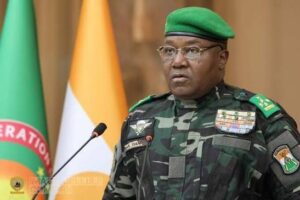
The decree that General Abdourahamane Tiani signed on 15 September 2026 raises one uncomfortable question for anyone watching Niger closely: can you keep a government standing by handing out posts to the people who shout loudest for it? Officially, the text was sold as a bland “technical reorganisation” — a line nobody in Niamey seemed to believe. In reality, this first big cabinet shake-up is a political rescue mission. With pressure mounting on every side, the Conseil national pour la sauvegarde de la patrie (CNSP) is doing what embattled governments do: pulling its allies closer, paying off its supporters and tightening its grip before the grumbling outside turns into something louder.
A panic reshuffle dressed up as routine housekeeping
There is nothing accidental about the timing or the casting. The new team is the direct fallout of the mutiny that erupted last August at Air Base 101 in Niamey, an episode that rattled the regime to its core. Once the military command and the presidential guard had been purged and hastily rebuilt, the Tiani leadership turned to the political side of its own self-defence — swapping faces in the cabinet to shore up the inner circle.
The same logic runs through every appointment. Putting Colonel Bilaly Elhadj Gambobo in charge of Agriculture and Livestock is not about transforming what ends up on Nigerien dinner plates. It places one more uniformed officer over a strategic sector, while officers seen as inconvenient are quietly moved aside. The result is tighter military control over the country’s resources, and one more step away from transparent, civilian-led management.
Serving the state to serve themselves: how the pie gets sliced
The clearest illustration of this drift is the arrival of Abdourahamane Oumarou, head of the UNPP and one of the loudest organisers of the sovereigntist camp. He was not chosen for his management skills but for his ability to out-shout the room. A loyalist from the very first days after the July 2023 coup, he now takes the Ministry of Youth and Refoundation as his reward.
Meanwhile, young Nigeriens keep sliding deeper into unemployment and despair. The message is hard to miss: the CNSP would rather hand out portfolios to its propagandists than confront the problem. The calculation is cold and deliberate — buy the silence of party activists, then use these street-level figures to shape public opinion and smother criticism on social media. Reward first, governance later.
Academic cover: technocrats used as human shields
To dress up the political horse-trading, the junta slipped a handful of academic names into the line-up, among them Professor Mahamadou Saidou at Higher Education and Oumarou Maman at Humanitarian Action. It would be a mistake to read too much into those choices. They are window dressing.
Two portfolios, two impossible briefs
How is Professor Saidou expected to calm restless universities when he has no financial means to work with? How will Oumarou Maman help war-displaced families while state coffers sit empty and international aid has been cut off? These technocrats are not there to fix anything. They are there to absorb the blame — the faces that will take the fall when a system already buckling under the weight of poverty finally gives way.
What ordinary Nigeriens actually stand to lose
- Households already squeezed by the cost of living see no relief coming from a cabinet built around loyalty.
- Young people looking for work get a ministry handed to a political organiser instead of an economic plan.
- Universities and humanitarian operations are left with symbolic ministers and empty budgets.
- Public services lose ground as strategic sectors are placed under military oversight rather than civilian management.
So what is this reshuffle really buying? Stability for a circle of loyalists, a few more months of quiet inside the ruling bloc, and a louder propaganda machine to keep critics at bay. What it is not buying is a strategy, a roadmap, or anything resembling a future for the country. It is a patch-up job by a government with its back to the wall, one that would rather feed its most faithful supporters than face soaring prices, a broken economy and the expectations of a population that has been waiting too long. Rearranging the seating around the table will not hide the fact that the system itself has stopped working.