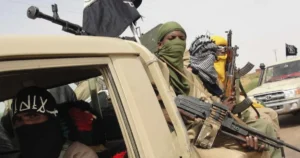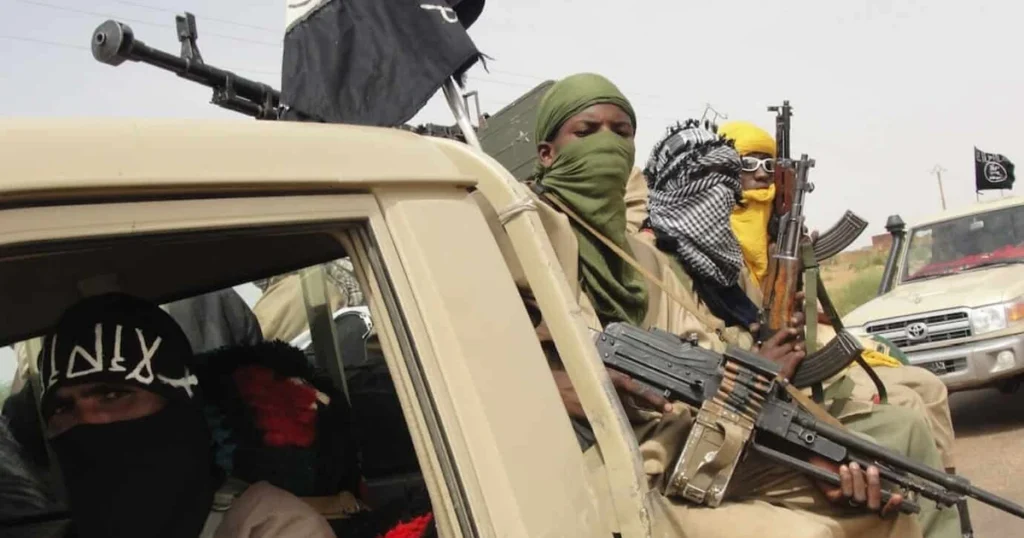
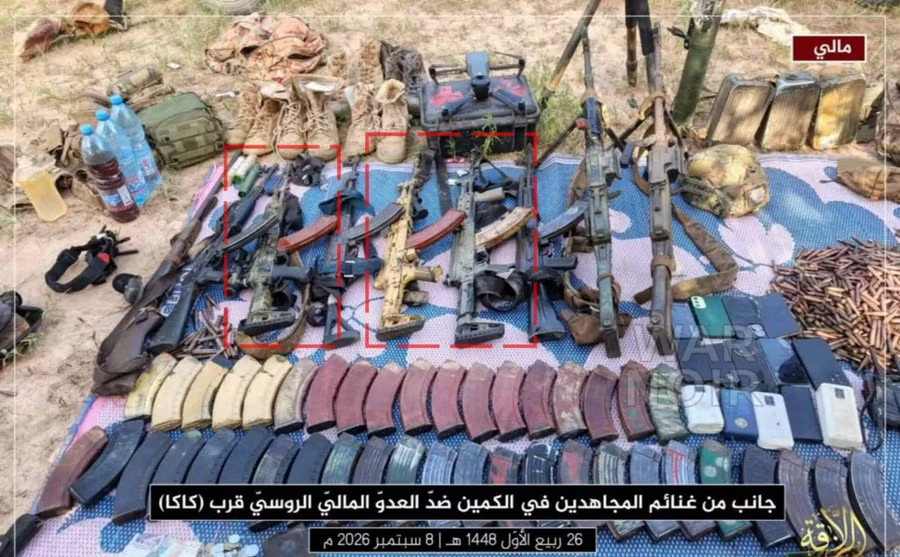
A joint patrol of the Russian Africa Corps and Malian government troops was targeted in a lethal ambush executed by the militant group Jama’at Nusrat al-Islam wal-Muslimin (JNIM) in the Mopti region. The strike occurred close to the settlement of Kaka on September 9, resulting in the deaths of 13 soldiers from the combined Russian and Malian force.
Following the confrontation, JNIM fighters captured a significant cache of military hardware. The seized items include 14 motorbikes, two PKM machine guns, six Kalashnikov assault rifles, six hand grenades, and an extensive supply of ammunition.
Escalating pattern of violence
This latest encounter follows a major clash on July 14, when insurgents intercepted a large military convoy in northern Mali. That convoy, composed of roughly 100 Malian government troops and over 200 Russian mercenaries operating under the Russian Ministry of Defense’s Africa Corps, suffered devastating losses. The July ambush left approximately 60 Malian soldiers dead, dozens wounded, and at least 30 others taken prisoner.
Despite the regular occurrence of such high-casualty ambushes against military transports in the country, cooperative security strategies between Bamako and Moscow have yet to produce an effective solution to counter these persistent tactical threats.
Understanding the JNIM threat
As the official franchise of Al-Qaeda in the Sahel, JNIM stands as one of the most formidable coalitions of jihadist factions in the region. The group was established on March 2, 2017, through the merger of several pre-existing militant organizations, including Ansar Dine, Al-Mourabitoun, the Sahara Emirate branch of Al-Qaeda in the Islamic Maghreb (AQIM), and the Katiba Macina.
While Mali serves as the primary operational hub for JNIM, the coalition has systematically pushed its operations across international borders. Its fighters are heavily active in neighboring Burkina Faso and Niger, and have increasingly established footholds further south in Bénin and Togo, representing a dangerous expansion from the central Sahel toward coastal West African nations.