The shadow over Congo’s power: 30 years of espionage shaping a nation

Kinshasa — For decades, power in Congo was never seized in the light of day. It was taken in the shadows, through the whispered deals of intelligence services that became the true architects of the nation’s fate. These agencies didn’t just serve the state; they were the state. When the Sûreté coughed, the Presidential Palace shivered. When the CND listened, ministers fell silent. When the ANR acted, justice bowed. This is the untold story of Congo’s shadow war, from independence to the fall of Mobutu.
Born in chaos: the intelligence machine takes shape
The Democratic Republic of Congo emerged from colonial rule in 1960 under a cloud of suspicion and Cold War intrigue. Within months, the first coup d’état unfolded. On September 14, 1960, Mobutu seized power—just three months after independence. Between June and September, a power vacuum yawned. Into that void stepped the Sûreté Nationale, destined to become the invisible hand guiding Congo’s destiny.
Their mandate was never formally written. Officially, they collected “political, economic, and social intelligence.” Unofficially, they did three things:
- Protect the leader — from enemies, from the army, even from the people.
- Monitor everyone — politicians, bishops, students, the diaspora—no one was beyond surveillance.
- Instill fear — to ensure no one dared challenge the status quo.
From 1960 to 1990, a single system evolved under three men who defined the grammar of fear in Congo:
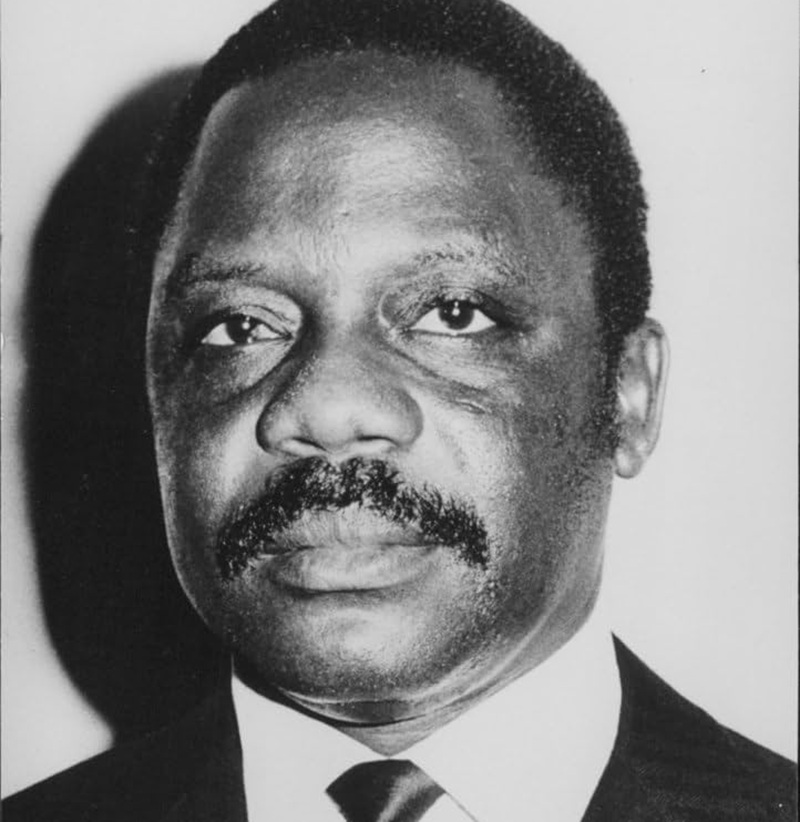
Victor Nendaka Bika: the man who invented Congo’s machine of power
An unlikely figure: a nurse turned spymaster. Appointed director of the Sûreté in October 1960, Nendaka transformed the agency from a colonial police force into a political weapon. His rule was absolute. He answered only to Mobutu, not to ministers. In December 1961, he demonstrated his power by using troops to surround his own offices and force the dismissal of the Interior Minister, Christophe Gbenye. The message was clear: “The Sûreté answers to no one.”
Nendaka’s shadow loomed large over the most pivotal moment in Congo’s post-independence history. On January 17, 1961, Patrice Lumumba, Maurice Mpolo, and Joseph Okito were transferred to Elisabethville under orders from the Sûreté. By dawn, they were dead. Nendaka later claimed innocence, insisting he only followed orders from higher up. Yet declassified documents reveal his central role in organizing the transfer. In his own words: “Kasa-Vubu accepted the transfer because he believed, as I did, that Lumumba would not be killed.”
Historians have since labeled him “the Congolese Oufkir”—a reference to Morocco’s feared spymaster. Nendaka’s legacy was not one of laws, but of fear. He built the Bureau d’Investigations Nationales (BIN), turning it into an instrument of control used by the Groupe de Binza, the secretive cabal that ruled Congo from the shadows.
Seti Yale: the mastermind behind Congo’s KGB
Where Nendaka laid the foundations, Seti Yale professionalized the machinery of terror. Trained by Israel and the United States, Yale transformed the BIN into the Centre National de Documentation (CND), Congo’s answer to the KGB. He installed wiretapping, surveillance, and torture as standard operating procedures. The CND became an “empire within the state.” Every ministry had its informant. Every embassy, its antenna. Fear spread beyond Congo’s borders, reaching Europe.
Yale’s era marked the shift from ad-hoc repression to a fully industrialized system. Under his leadership, the CND didn’t just collect intelligence—it manufactured reality. Disappearances, forced confessions, and fabricated plots became tools of governance. He trained a generation of operatives who would later serve under Mobutu—and later regimes.
Honoré Ngbanda: the terminator who globalized fear
Known as “Terminator,” Ngbanda took Congo’s intelligence apparatus to its most brutal apex. Under his command, the CND became a parallel state. He exported repression across borders, targeting not only Congolese dissidents but also exiles in Europe. His network stretched from Kinshasa to Brussels, Paris, and beyond. Ngbanda didn’t just protect Mobutu—he became the face of the regime’s cruelty.
By the late 1980s, the system had grown too powerful even for Mobutu. Ngbanda was dismissed in 1990. The CND’s reign of terror, however, did not end with his departure. It merely mutated. After Mobutu’s fall in 1997, the services were renamed—SNIP, AND, then ANR—but the caves remained. The methods evolved, but the goal stayed the same: control.
The anatomy of a shadow state
The Congo’s intelligence services were never just bureaucracies. They were survival mechanisms in a country born of war, coups, and deep distrust. Mobutu understood this better than anyone. He deliberately maintained multiple rival services—CND, SNIP, SARM, DSP—ensuring no single agency could dominate. Yet, he never let any one man control the entire machine for too long. Nendaka was dismissed in 1965. Yale was sidelined. Ngbanda was ousted in 1990. The revolving door at the top was intentional: a balance of terror.
The real mission of these agencies was never written into law. Officially, they collected data. Unofficially, they decided who lived and who disappeared. They shaped policy through dossiers. They decided who could speak, who could rise, who could breathe freely. In Kinshasa, power wasn’t debated in parliament—it was whispered in windowless offices, decided in backroom deals, enforced in the dead of night.
Legacy of the shadows: fear never dies
Mobutu’s regime ended in 1997, but the intelligence machine he built did not. It adapted. The ANR (Agence Nationale de Renseignements) inherited the CND’s archives, its methods, and its culture. Today, Congo remains a country where the shadows shape the light. Political opponents vanish. Journalists are monitored. Dissent is met with silence—or worse.
This is not just history. It is the DNA of power in Congo. A story told not in speeches or press releases, but in the hushed tones of those who have lived it. From the nurse who became a spymaster in 1960, to the terminator who ruled from the dark, Congo’s shadow war has shaped a nation—and it is still being written.