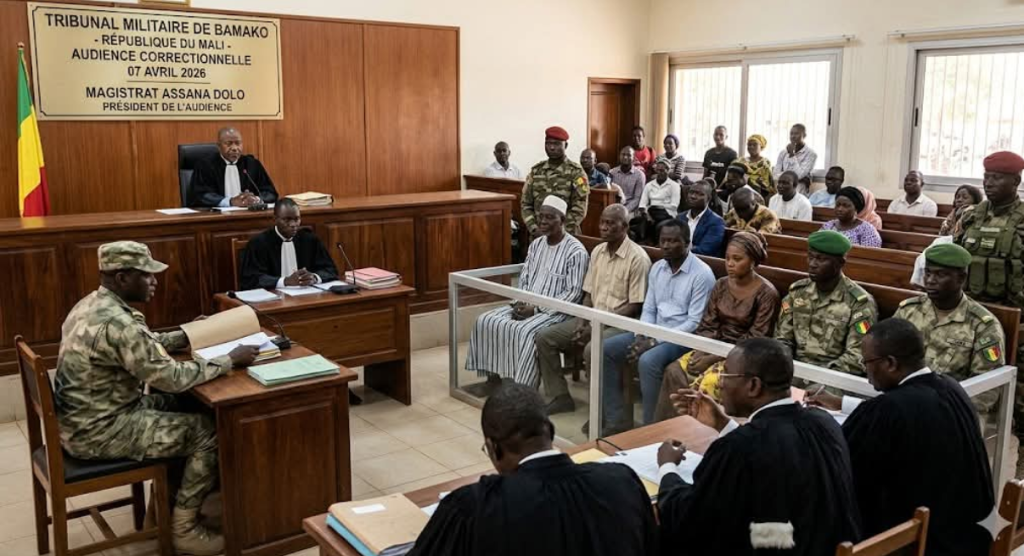
An atmosphere thick with tension gripped the courtroom in Bamako on a sweltering Monday morning. The trial of military personnel and civilians accused of plotting to overthrow the ruling junta had already drawn intense scrutiny, but when a fetishist took the stand, the proceedings took a turn that left onlookers stunned.
Political stakes and supernatural intrigue collide
The case, which carries serious charges including conspiracy to destabilize Mali’s transitional government, had always promised high drama. Yet few anticipated the surreal events that unfolded as the fetishist—accused of lending occult support to the alleged coup plotters—began to speak.
Trials involving national security matters often carry symbolic weight, but this session stood out for an entirely different reason. The inclusion of a spiritual advisor among the accused introduced a layer of mysticism rarely seen in formal judicial settings. While such figures occasionally surface in West African politics, their presence in a courtroom is almost always charged with symbolic significance.
A sudden collapse and the courtroom’s eerie reaction
The proceedings took a dramatic turn when the state prosecutor, tasked with delivering the indictment against the fetishist, stepped forward to present evidence. As he began his statement, something inexplicable occurred.
Mid-sentence, the prosecutor clutched his chest and abruptly halted his testimony, gasping for air. Before he could even reach for a glass of water, he collapsed onto the floor, leaving the courtroom in stunned silence. The shockwave of his fall was immediate—magistrates scrambled from their seats, the clerk bolted from the bench, and security personnel struggled to maintain order in the chaos.
The presiding judge, faced with an untenable situation, had no choice but to suspend the hearing on the spot. Proceedings were postponed until the following day, leaving the trial—and the watching public—in suspense.
Transportation turmoil and lingering unease
Even after the court adjourned, the unsettling events continued. The fetishist’s transfer back to a high-security detention facility became another cause for concern.
En route, the escort vehicle’s driver—a seasoned military officer—suddenly exhibited signs of disorientation. The adjutant-chef, gripping the wheel, appeared to lose control, swerving erratically before regaining composure. Witnesses later described the scene as deeply unsettling, reinforcing the growing sense that something beyond the ordinary was at play.
Inside the court’s corridors, speculation ran rampant. A prison official, speaking off the record, hinted at the possibility of the fetishist’s deep ties to spiritual traditions, remarking that his influence seemed reminiscent of practices associated with powerful gris-gris from Bénin.
The psychological ripple effect on Mali’s justice system
Beyond the immediate spectacle, the incident exposed a broader tension between Mali’s formal legal system and the enduring role of traditional beliefs. In a society where spiritual forces are often invoked to explain the inexplicable, the prosecutor’s sudden collapse was immediately interpreted by some as a sign of the fetishist’s alleged powers.
This reaction highlights a critical dynamic in Malian jurisprudence: the weight of perception. When a figure accused of wielding supernatural influence enters a courtroom, even the most rational actors can find themselves swayed by suggestion. Stress-induced physiological reactions—like the prosecutor’s collapse—are quickly reinterpreted through a lens of mysticism, placing immense pressure on judges to navigate both the law and the unspoken fears of those around them.
What lies ahead for the trial?
With the courtroom drama fresh in everyone’s minds, Tuesday’s resumed proceedings will unfold under heightened scrutiny. Authorities are expected to tighten security measures, not only for the fetishist’s protection but to ensure the trial’s integrity isn’t further compromised by fear or superstition.
The prosecutor’s health will be closely monitored, and additional safeguards may be implemented to prevent further disruptions. Yet the question remains: will the courtroom regain its composure, or will the trial continue to be haunted by forces beyond the legal?
As Mali’s justice system grapples with this unprecedented intersection of politics, law, and tradition, one thing is clear—the line between rational judgment and supernatural belief has never been so precariously thin.