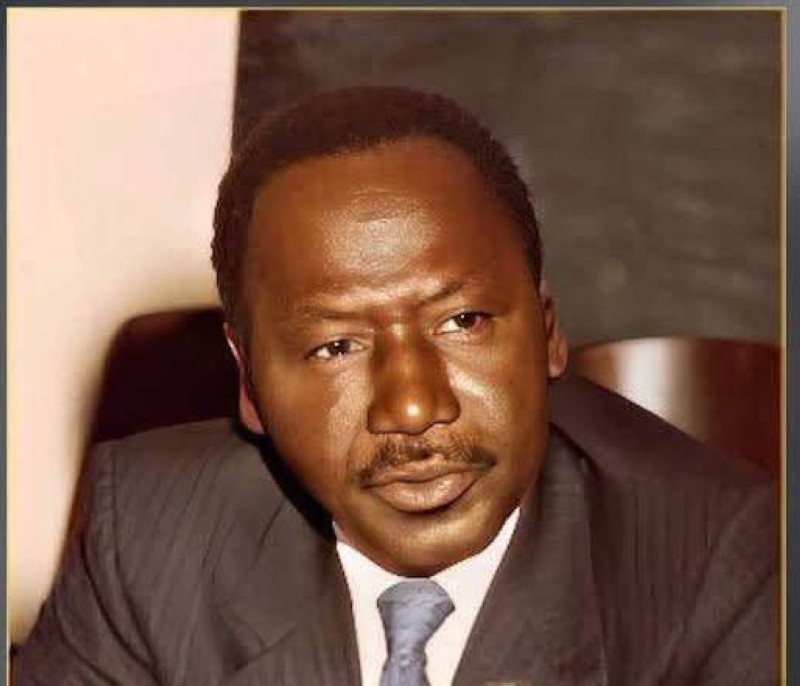
When a figure who helped shape a nation’s financial foundations passes away, the question that lingers is not only who he was, but who will carry forward what he built. Abdoulaye Koné, former Minister of Economy and Finance, died on Saturday, September 19, 2026, at the age of 91, leaving behind a legacy that raises a crucial dilemma for Côte d’Ivoire: how does a country preserve the institutional memory of a generation that no longer exists?
A life devoted to the Ivorian state
Born in Tingréla, in the north of Côte d’Ivoire, Koné spent the better part of his life in public service. His journey through the upper ranks of the Ivorian administration culminated in his appointment to government under President Félix Houphouët-Boigny. Before taking the economy and finance portfolio, he served as Director of the Budget and later as Secretary of State for the Budget — roles at the very heart of the state’s financial machinery, where budget balances and public spending priorities are determined.
His time in government placed him at the center of an era when Côte d’Ivoire was working to solidify the foundations of its economic development and strengthen its position within regional dynamics.
A regional architect of West African economic integration
President Alassane Ouattara paid tribute to Koné as a “great servant of the state” and a man of “experience and conviction” whose commitment contributed to the country’s economic and social development. But the president also highlighted another dimension of Koné’s career: his involvement in building the West African economic space.
According to the presidential tribute, Koné worked under President Houphouët-Boigny to consolidate the West African Economic and Monetary Union (UEMOA). This regional dimension gives particular weight to his legacy, recalling the role played by certain Ivorian senior officials in establishing and strengthening frameworks for economic and monetary cooperation among West African states.
His experience was not limited to government responsibilities. It also intersected with the professional path of Alassane Ouattara when the latter was serving at the Central Bank of West African States (BCEAO). The president described Koné as “a true source of inspiration and unwavering support” — a testament to the place his elder occupied in his own career.
The stakes: what happens to institutional memory?
With his passing, a part of Côte d’Ivoire’s administrative and economic memory fades. For decades, Koné witnessed the transformations of the Ivorian state — its periods of economic consolidation and the shifts in its regional environment. From the Budget Directorate to government, and later in roles tied to regional economic cooperation, his career mirrors a portion of the history of the country’s financial and economic institutions.
President Ouattara extended his condolences to Koné’s wife, children, family, and loved ones.
The time will come to assess the full scope of this long career. For now, what remains is the memory of an economist, a senior civil servant, and a minister who devoted several decades to the state. At 91, Abdoulaye Koné has departed. Behind him lies an administrative legacy, experience accumulated through years of responsibility, and a memory that Côte d’Ivoire must now pass on to generations who never knew this man of the shadows — long present in the machinery of the Republic.