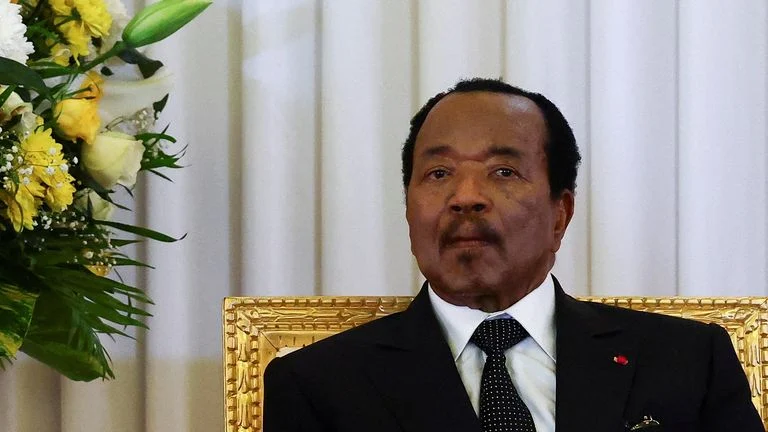
Paul Biya, Cameroon’s long-serving president, has once again vanished from the public eye, leaving the nation in a state of uncertainty. Since departing on June 7, 2026, for what was initially framed as a private trip to Europe, the 93-year-old leader has not returned, marking over 40 days of unexplained absence. The silence from official channels has only deepened concerns among Cameroonians, especially after his re-election in November 2025 for another seven-year term.
This is far from the first time Biya has been absent for extended periods. His frequent trips to Switzerland, often to high-end hotels, have become a recurring pattern over his 40-plus years in power. Critics question whether these absences are purely health-related or if they reflect a deeper reliance on foreign medical care—a trend not uncommon among some African leaders who prefer treatment abroad. However, in Cameroon, where state health matters are treated as classified, concrete details remain elusive.
Who really governs Cameroon?
The prolonged absence has reignited debates about governance in Cameroon. With Biya spending more time abroad than in the country, many Cameroonians are left wondering who is truly steering the nation. Some go so far as to suggest the country operates on autopilot, a claim that may not be entirely unfounded. How can a president fulfill his duties when he is rarely present among his people?
Opposition voices, including MP Jean Michel Nintcheu, have openly called for the Constitutional Council to declare a power vacuum. The ruling party swiftly countered, declaring, “The Lion has not left his throne.” Yet, the frustration among citizens is palpable, particularly as the president’s health appears increasingly fragile with age.
Government stagnation under Biya’s rule
Cameroon under Biya remains a case study in prolonged political stability—or stagnation. His administration, led by Prime Minister Joseph Dion Ngute since January 2019, has remained unchanged since Biya’s latest re-election, defying conventional expectations. Even after a constitutional amendment reintroduced the vice-presidential position in April 2026, Biya has yet to appoint one.
This stagnation extends beyond the executive branch. Cameroon holds another record: the world’s oldest active police chief, Martin Mbarga Nguélé, recently celebrated his 90th birthday while still serving as the head of national security. Such longevity in key roles underscores the unyielding grip of Biya’s leadership—a leadership that shows no signs of relinquishing control, even as questions about its legitimacy grow louder.
A leadership disconnected from the people
For many Cameroonians, Biya’s extended absences symbolize a presidency out of touch with reality. The lack of communication only fuels speculation, while the ruling elite dismisses concerns with hollow reassurances. As one political observer noted, “In Cameroon, the show must go on—regardless of who’s watching.”