Lomé’s Strategic Shift: Russian Troops Arrive Amid Growing Security Concerns
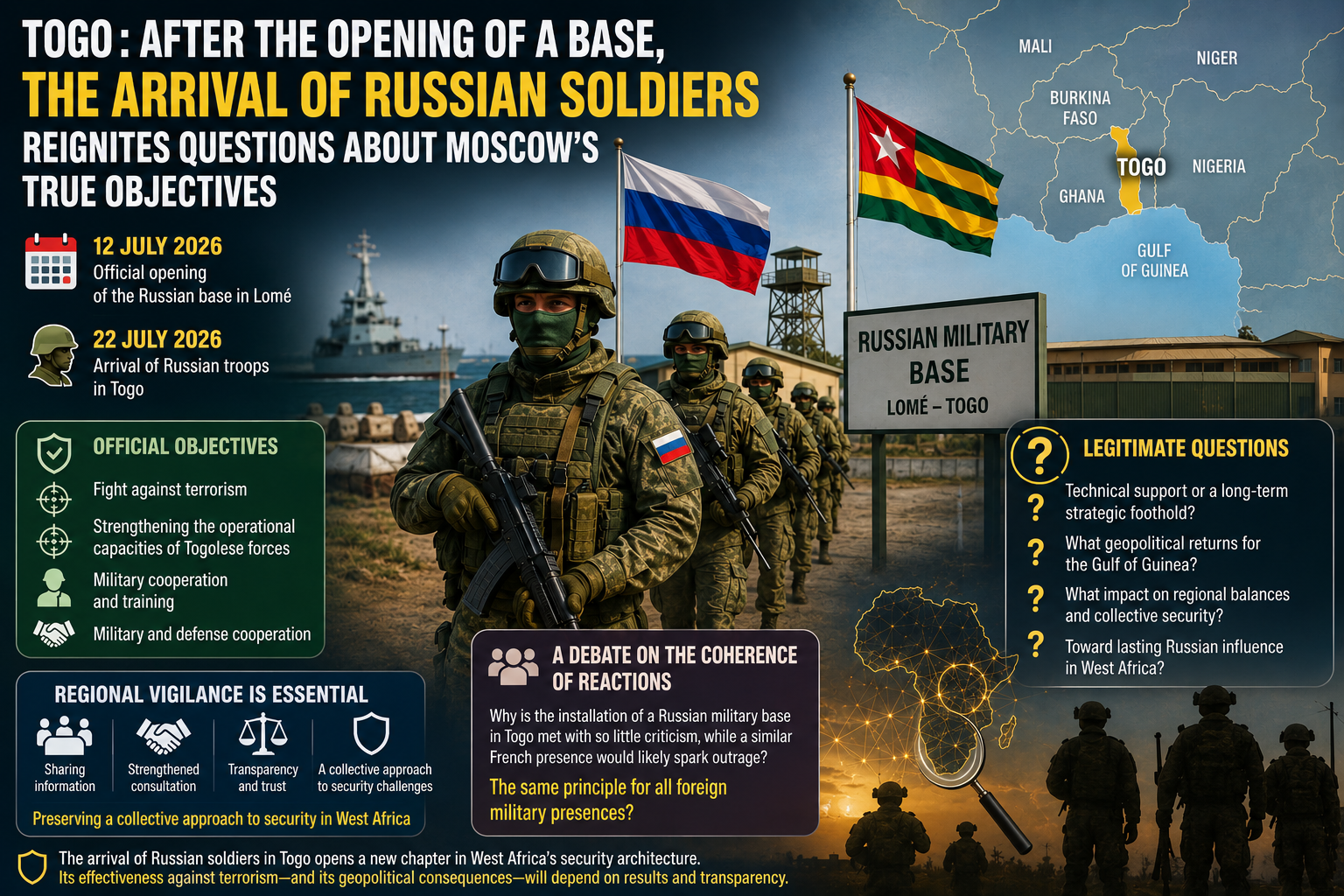
The deployment of Russian military personnel to Togo, confirmed on July 22, 2026, follows the opening of a Russian base just ten days prior. According to official statements, these servicemembers are tasked with supporting Togo’s counterterrorism efforts and enhancing the operational readiness of its armed forces. While the collaboration aligns with the sovereign decisions of Lomé’s leadership, it has ignited broader discussions about the long-term implications for West Africa’s security landscape.
Moscow’s Expanding Footprint in Africa
This development is part of a broader trend: Russia’s deepening military engagements across the continent. Through defense agreements, training programs, arms supplies, and select deployments, Moscow has steadily cultivated partnerships with African nations. Togo’s latest cooperation represents another step in this strategic outreach, raising questions about the true objectives behind such alliances.
Dual Role or Geopolitical Strategy?
Analysts are divided over whether the Russian presence in Togo is purely a technical support mission or a calculated move to embed Russia in the Gulf of Guinea’s security architecture. The ambiguity stems from the fact that military cooperation often extends beyond combat roles—encompassing intelligence sharing, logistical support, defense industry collaboration, and diplomatic influence.
A Contrast in Regional Reactions
The arrival of Russian forces has prompted limited criticism compared to past reactions over foreign military bases in West Africa. Notably, Togo’s neighbors in the Sahel Alliance have historically opposed Western military presences, labeling them destabilizing or interfering. Yet, the Russian deployment has elicited comparatively muted responses, fueling speculation about selective standards in evaluating foreign military engagements.
Questions of Consistency and Sovereignty
Observers argue that if military presence is universally seen as a sovereignty issue, critiques should apply uniformly, regardless of the partner. The perceived double standard—condemning some alliances while tolerating others—underscores the need for transparent, principle-based discussions rather than geopolitically driven narratives.
Strategic Implications for West Africa
For neighboring states, Togo’s decision underscores the importance of vigilance. While recognizing Lomé’s right to forge independent defense partnerships, regional actors must assess how such moves could reshape collective security frameworks, regional cooperation mechanisms, and diplomatic balances in West Africa.
The surge in transnational terrorism and intensifying great-power rivalries demand a unified, transparent approach. Enhanced information sharing and coordinated dialogue among West African nations could mitigate misunderstandings and foster collective resilience against shared threats.
The Road Ahead: Evaluating Impact
The true consequences of this military cooperation—both in combating insecurity and altering geopolitical dynamics—will only become clear with time. As Togo and Russia formalize their partnership, the international community will closely monitor its short- and long-term effects on regional stability and the evolving power dynamics in the Gulf of Guinea.